
The Great Energy Delusion: Why the EV Transition is Just a Marketing Stratagem to Sell You New Shit

We have been sold a massive, incredibly profitable lie. The prevailing narrative in the climate fight is simple, highly marketable, and scientifically broken: scrap your current vehicle, buy a shiny new Electric Vehicle (EV), plug it into the grid, and magically, the planet heals.
But as an engineer who can look at cradle-to-grave lifecycle data rather than glossy corporate brochures, I’m here to tell you that this isn't an environmental revolution. It is a marketing stratagem designed to force a global fleet turnover. The auto industry has weaponized our climate anxiety to do the one thing they care about: sell you new shit.
If we actually want to unfuck the atmosphere, we need to stop obsessing over tailpipe emissions and look at the entire crust of the Earth treating it for what it is: a Closed System. The EV transition is an accounting trick that front-loads a carbon debt we cannot afford to pay, while aggressively ignoring the unsung heroes of this story: advanced biofuels.
1. The Grift of Planned Obsolescence
Let’s start with the most basic law of sustainability: the greenest car on the planet is the one you already own.
Building a 4,000 pound machine requires a staggering amount of energy and carbon. When governments and automakers push you to scrap a perfectly functional internal combustion engine (ICE) vehicle to buy an EV, you are throwing away all the embodied energy of that original car. We are trying to consume our way out of a climate crisis caused by overconsumption. It is a thermodynamic absurdity.
2. The "Carbon Backpack" and the Degradation Cliff
The biggest lie in modern environmentalism is that an EV is "zero emissions" the moment it leaves the factory. It’s not. It is born in a massive carbon hole.
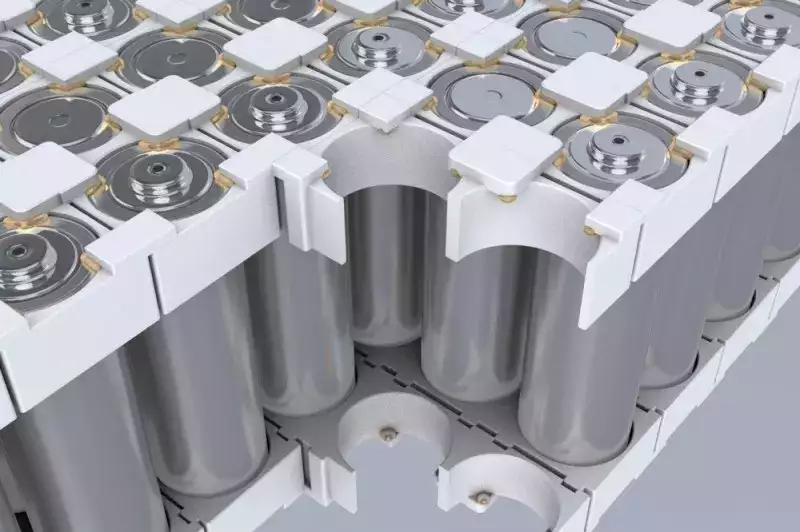
To build a standard 75 kWh lithium-ion battery, you aren't just snapping Legos together; you are moving mountains. According to the International Energy Agency (IEA) in their 2026 Mineral Outlook, an average EV requires roughly 200 kilograms of critical minerals—six times the mineral intensity of a conventional car. Extracting and refining this material (often in coal-powered kilns in China) means an EV starts its life with an "embodied carbon penalty" of 10 to 15 metric tons of CO2.
If you live in a region with a fossil-heavy power grid, like parts of the US Midwest or Eastern Europe, your EV has to travel over 100,000 kilometers just to "break even" with the emissions of a standard petrol car. We are front-loading a decade of carbon emissions today in the blind hope of a benefit ten years from now.
And here is the brutal irony: by the time that car finally hits its carbon break-even point at 100,000 km, the battery has already suffered irreversible chemical degradation. You are marching closer to the warranty cliff, losing range every winter, and creeping toward a €15,000 battery replacement that will reset the car's entire carbon debt right back to zero.
3. The Hydrological Nightmare: Water vs. Wire
We talk endlessly about carbon, but we conveniently ignore the hydrological footprint of this "green" revolution.
In the Lithium Triangle of South America, extraction relies on pumping brine from underground salars into massive evaporation ponds. Research published in the Journal of Cleaner Production shows that it takes roughly 2 million liters of water to produce just one ton of lithium. In these hyper-arid desert regions, this is an ecological death sentence. Indigenous communities are losing their groundwater so someone in London can commute in a silent car.
Contrast this with the biofuel counterpoint. Critics love the 20-year-old argument that biofuels "steal" water from food crops. That is outdated nonsense. The 2026 USDA Biofuel Feedstock Report shows that modern, advanced biofuels utilize drought-resistant, non-food cover crops like Camelina sativa. It grows on marginal land using natural rainfall, requiring virtually no irrigation, and actually improves soil health for subsequent food crops. We are trading essential water security for mineral-heavy batteries.
4. The Grid’s Dirty Secret: Fossil-by-Wire
An EV is a thermodynamic middleman. It is only as clean as the power plant it is plugged into.
As of early 2026, the global average electrical grid still has a Carbon Intensity (CI) of roughly 450 grams of CO2 per kilowatt-hour. When you charge an EV on a grid powered primarily by natural gas and coal, you are not eliminating emissions; you are just moving the tailpipe to a smokestack 50 miles away. Factor in the efficiency losses—generation, transmission over miles of wire, and AC to DC conversion—and you are losing over half of the original energy before the rubber ever meets the road.
5. Energy Density: Why Batteries Can't Fly
Gravity is a harsh, unforgiving mistress. Weight is everything. Liquid fuels pack roughly 45 to 50 megajoules of energy into every single kilogram. A state-of-the-art lithium-ion battery holds less than 1 megajoule per kilogram.
Liquid fuels are 50 to 100 times more energy-dense than batteries. This is why you will never see a battery-powered commercial airliner crossing the Atlantic, and why heavy-duty long-haul trucking struggles to electrify. To give a semi-truck a 500-mile range, the battery has to be so fucking heavy that the truck loses a massive percentage of its legal cargo capacity. Biofuels are not just a "bridge" for heavy transport; they are the only scientifically viable destination.
6. The Circular Carbon Logic of Biofuels
Let’s talk about why internal combustion engines running on advanced biofuels actually win the math.
When you burn a fossil fuel, you are venting ancient carbon into the modern atmosphere. But when you burn a biofuel, you are releasing the exact same CO2 that the plant sucked out of the atmosphere just a few months prior through photosynthesis. It is a biological closed loop.
Data from the California Air Resources Board (CARB) 2026 Low Carbon Fuel Standard (LCFS) shows that Hydrotreated Vegetable Oil (HVO) derived from waste fats has a Carbon Intensity score as low as 15 gCO2e/MJ. Compare that to the US grid average for EVs, which hovers around 35 to 40 gCO2e/MJ. The liquid fuel is currently cleaner than the battery.
7. The Ultimate Flex: Carbon Negative Fuels
It gets better. Some biofuels are mathematically carbon negative.
According to CARB, Dairy Biomethane—or Renewable Natural Gas (RNG)—has a CI score that can reach -250 gCO2e/MJ. Cows produce manure, which sits in massive lagoons and off-gasses methane (a greenhouse gas 80 times more potent than CO2). By capturing that fugitive methane and refining it into fuel for heavy-duty trucks, we are actively removing a hyper-potent climate heater from the atmosphere. An EV does not clean up existing waste streams; RNG actively heals the atmosphere while moving cargo.
8. The "Drop-In" Miracle vs. The Trillion-Dollar Grid
The EV transition demands that we scrap a global fleet of 1.4 billion vehicles. It demands that we dig up every street to lay thicker, high-voltage copper cables and redesign our entire electrical grid. The environmental damage of mining that much copper (as warned by Benchmark Mineral Intelligence’s 2026 deficit reports) is catastrophic.
Advanced biofuels, specifically Renewable Diesel (HVO), are "drop-in" fuels. They are chemically identical to petroleum diesel. You can pour HVO into a tractor built in 1998 or a truck built in 2026 without modifying a single engine component. We already have the gas stations, the pipelines, and the storage tanks. We could slash the emissions of the 1.4 billion cars already on the road tomorrow.
The Bottom Line
Physics does not care about your political affiliations, and it certainly doesn't care about a "zero emissions" bumper sticker. It cares about the net flux of carbon and the destruction of the Earth's crust.
We are being sold a technological fantasy that requires us to strip-mine the planet to generate corporate profits disguised as environmentalism. It's time to stop worshiping at the altar of the lithium-ion battery and look at the actual chemistry. The solution isn't "no more engines." The solution is "no more fossil fuels." We can grow our way out of this, but only if we stop ignoring the data.